



Technical specifications
Grade & treatment
Fitting & quantities
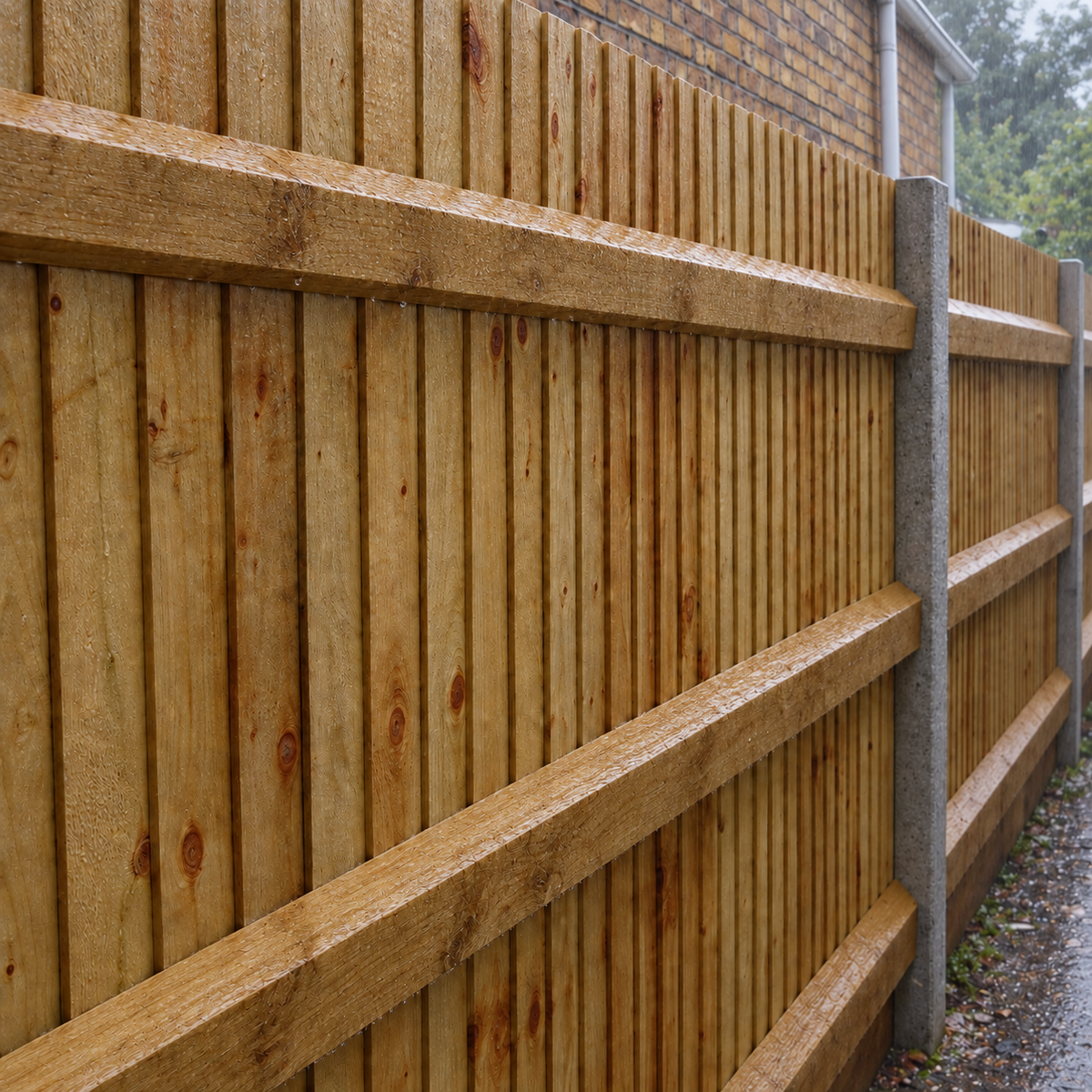
The Cant Rail is a pressure-treated capping rail with a chamfered top edge, designed to sit along the top of a closeboard or featheredge fence frame and shed rainwater away from the boards beneath it. It's a small, easily overlooked component in a DIY build, but it's doing a specific structural job: protecting the most vulnerable part of your fence — the top edge, where boards meet air and weather head-on — from sitting wet.
Pressure treated to the correct above-ground standard, it's built to hold up to the same UK weather as the rest of your fence, without being asked to do a job — ground contact — it was never designed for. Supplied in a single 3m length.
- Chamfered capping railSheds rain off the top edge, where boards rot first
- Pressure treatedTreated right through, not just coated on the surface
- Cut and built hereNot a container import — made to our spec
How much do you need?
Give us the length of your run and we'll work out the panels, posts and gravel boards — then add the lot in one go.
Frequently bought together
Often ordered alongside this, on the same delivery.


See it in 3D
Turn it, zoom right in, and see how it is put together.
Similar products


Frequently asked questions
The things people ask before they order. Anything else, give us a ring.
How much is delivery?
For now we deliver across Birmingham & the Black Country only, and delivery is free. Put your postcode in the checker above to see if we cover you.
Is there a discount for buying in bulk?
Yes, and you do not need a code or an account. The discount is applied automatically at checkout: 3% from 10 units, 5% from 25 and 8% from 50, counted across everything in your basket.
Is the timber treated?
Yes — pressure treated as standard, apart from the picket panels, which come untreated. Seal any cut ends with a preservative before they go in the ground.
What if I find it cheaper somewhere else?
Tell us where. If it is the same product, in stock and deliverable to your postcode, we will look at matching it. Read the price match promise.
How do I work out how much I need?
Measure the run rather than counting panels — the arithmetic catches people out, particularly the extra post at the end. How to measure a run walks through it.
Still not sure what you need?
Send us the measurements and we will tell you what the job takes.


